In the fast-paced modern world, we often overlook the stark reality of our mortality. Every day, approximately 175,000 people depart from this earth, marking the end of entire lineages and fragmenting families. While the subject is often treated as a cliché, understanding the statistical landscape of death provides a profound perspective on the value of our time. For a healthy 30-year-old male, the odds of an unforeseeable death tomorrow are roughly 1 in 250,000, or a mere 0.004%. For females of the same age, the odds are even lower at 1 in 800,000. These figures encompass a variety of bizarre and mundane risks. For instance, the annual chance of dying due to a vending machine is 1 in 112 million—statistically more likely than winning a Powerball jackpot. Other risks include a 1 in 1 million chance of death by a bathtub or a tree, and a 1 in 7,000 chance of being killed by another human. However, as we age, these probabilities shift from 'unlikely' to 'inevitable,' with the 10-year mortality risk for a 30-year-old rising to nearly 3% when health-related factors are included. Yet, focusing exclusively on the end of life misses the far more staggering 'miracle' of its beginning. For you to exist, your parents had to meet against a 1 in 20,000 probability. This encounter had to occur within a precise reproductive window, governed by the incalculable variables of human attraction and love. The biological lottery then intensifies at the cellular level, where a specific egg and a specific sperm must combine out of trillions of possibilities, an event with odds exceeding one in a quadrillion. This improbable success story is not a singular event but a link in a chain. It had to be repeated for your grandparents, their parents, and every ancestor dating back to the first microbial life forms in the primordial oceans. Your existence is contingent upon a billion-year-long chain of propagation that never once broke, despite the countless external threats throughout evolutionary history. Expanding our view to the cosmic scale, the odds become even more absurd. Earth resides in a 'habitable zone' where the proximity to a star allows for liquid water and stable temperatures. Furthermore, the very existence of matter and energy depends on incredibly specific laws and constants. If the strength of gravity or the dimensions of spacetime were altered by even a slight degree, stars, planets, and carbon-based life would never have materialized. As the philosopher Ludwig Wittgenstein famously noted, the mystery is not *how* the world is, but *that* it exists at all. We are the legacy of 15 billion years of cosmic evolution, a sentiment echoed by Carl Sagan when describing our emergence from the 'oceans of space and time.' We are the universe experiencing itself through a set of nearly impossible circumstances. Given that the odds of your current existence are 100%, despite being statistically inconceivable, the only logical response is to utilize your time with intention. Whether through professional development, such as mastering coding via platforms like boot.dev, or personal engagement with the world, our brief moment of consciousness is a gift. Death is not merely a tragedy; it is the final price of admission to the most exclusive event in the universe.
The Statistical Miracle of Existence: Navigating the Absurd Odds of Life and Death
結論Life is a statistical anomaly resulting from quadrillion-to-one biological odds and precise cosmic fine-tuning, making death the inevitable conclusion of an improbable miracle.

Pursuit of Wonder/The Realization That Life Is Absurd Is Only the Beginning.../📅 2026年3月31日 公開
信じられますか?このクオリティの記事と図解を manabi は たった1分 で自動生成しました
この動画の重要ポイント
- 1The statistical probability of dying on any given day is remarkably low, yet mortality remains the only 100% certainty of the human condition.
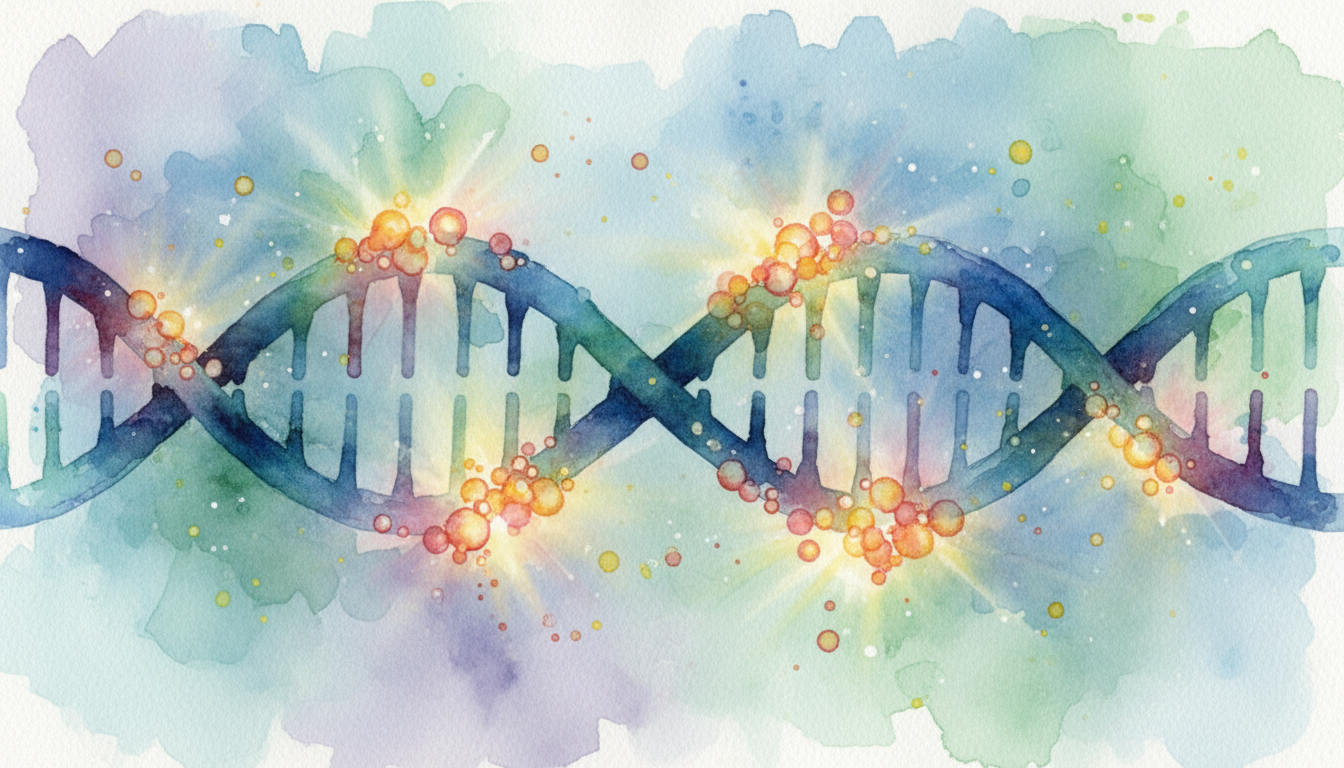
- 2Your individual existence is a 'one in a quadrillion' biological event, requiring an unbroken chain of specific encounters stretching back billions of years.
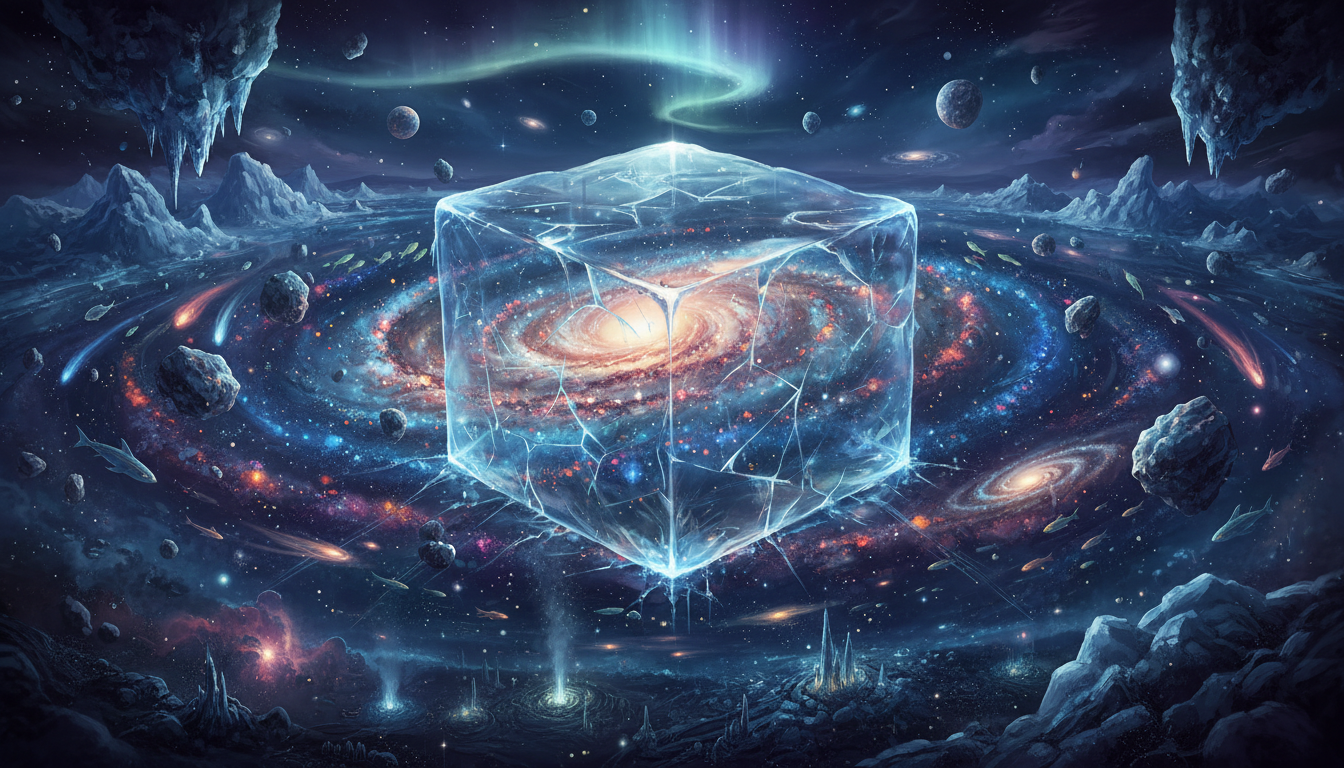
- 3The universe is finely tuned with specific physical constants and habitable zones, making the emergence of life a cosmic anomaly.
こんな人におすすめ
- Individuals seeking existential perspective on the value of time.
- Science and philosophy enthusiasts interested in probability.
- Professionals looking for motivation through deep conceptual insights.
manabi 編集部の視点
This content provides a compelling philosophical framework for valuing human life through the lens of probability theory and astrophysics. While the statistics cited (such as the 1 in 20,000 chance of parents meeting) are illustrative approximations rather than rigorous scientific certainties, they effectively serve the narrative of existential 'absurdity.' Readers should note that while mortality risks are mathematically low for the healthy, the psychological impact of such data varies. The inclusion of boot.dev as a sponsor suggests that the ultimate takeaway is the proactive use of one's st
AIが生成したビジュアル
タップして拡大

あなたが見たい動画も
1分で要約・図解化しませんか?
無料登録で累計3回まで
主要トピック
The Statistics of Death
- Daily odds of death for a healthy 30-year-old: 1 in 250,000 (male) to 1 in 800,000 (female).
- Bizarre risks: Vending machines (1 in 112M) are more likely than Powerball wins.
- Mortality is the only 1/1 certainty once life has begun.
The Miraculous Odds of Birth
- Parents meeting: 1 in 20,000 chance.
- Specific egg/sperm combination: Less than 1 in 1 quadrillion.
- Requires an unbroken billion-year chain of survival and reproduction.
Cosmic and Physical Necessity
- Life requires the 'habitable zone'—precise distance from a star for liquid water.
- Universal constants (gravity, spacetime) must be perfectly balanced for matter to form.
- We are the result of 15 billion years of complex cosmic evolution.
Summary & Action Plan
- Accept the absurdity of existence to find freedom and meaning in your actions.
- Invest your limited time in high-value skills like programming via boot.dev to maximize your impact.
次はあなたが魔法を使う番です
あなたが作った要約が、
同じように悩む誰かの灯火になります。
無料登録で累計3回まで
よくある質問
Q1.What are the odds of dying from a vending machine?
The annual chance is approximately 1 in 112 million, which is statistically more likely than winning a major lottery jackpot.
Q2.How likely is it for a specific individual to be born?
The odds are less than 1 in a quadrillion, considering the specific egg and sperm combination required for a unique genetic makeup.
Q3.Who are Ludwig Wittgenstein and Carl Sagan?
Ludwig Wittgenstein was a philosopher focused on logic, while Carl Sagan was an astronomer known for popularizing cosmic evolution.
Q4.What is the 'habitable zone' in the universe?
It is the region around a star where conditions are just right to allow for liquid water on a planet's surface, essential for life.
Q5.How does boot.dev help in utilizing time wisely?
It offers a gamified, RPG-style approach to learning high-value programming skills like Python and Go, turning career development into an immersive experience.