Antimatter represents the most volatile and expensive substance in the known universe, valued at roughly one billion dollars per gram. At CERN, physicists are engaged in the complex task of creating and storing this elusive substance to solve a paradox that challenges our fundamental understanding of reality. When matter and antimatter meet, they undergo a process called annihilation, converting their combined mass entirely into pure energy according to Einstein’s E=mc² equation. This process is the most violent allowed by physics, far exceeding the efficiency of nuclear fission or fusion. The theoretical foundation of antimatter was laid by physicist Paul Dirac, who reconciled special relativity with quantum mechanics. His equations predicted a negative energy state for electrons, which he realized corresponded to a particle with identical mass but opposite charge: the Positron. This discovery led to the development of Quantum Field Theory, which posits that all particles are excitations of underlying fields. For every particle excitation, a mirror-image anti-excitation must exist. This symmetry suggests that the universe should be perfectly balanced between matter and antimatter. However, this theoretical balance creates a massive contradiction with the Big Bang theory. In the early, high-energy universe, photons were constantly converting into particle-antiparticle pairs. As the universe cooled, these pairs should have annihilated each other completely, leaving behind nothing but a sea of radiation. If the laws of physics were perfectly symmetric, stars, planets, and humans would not exist. Yet, when we observe the Cosmic Microwave Background, we find evidence of a slight asymmetry: for every billion pairs of particles that annihilated, one single matter particle survived. To understand why this 'one-in-a-billion' survival occurred, scientists at CERN are scrutinizing the three fundamental symmetries of nature: Charge (C), Parity (P), and Time (T). Charge symmetry implies interactions remain identical if charges are swapped; Parity symmetry suggests laws of physics are the same in a mirror-image universe; and Time symmetry means laws work identically forwards or backwards. Together, these form CPT Symmetry, a cornerstone of the Standard Model and Special Relativity. If CPT symmetry is broken, it would indicate 'New Physics' beyond our current understanding. CERN’s antimatter factory performs the Herculean task of decelerating anti-protons from nearly the speed of light to manageable speeds using the Antiproton Decelerator and ELENA ring. Because antimatter annihilates upon touching the walls of any container made of matter, it must be stored in sophisticated 'traps' using powerful magnetic and electric fields. These traps keep the antimatter suspended in a near-perfect vacuum, allowing researchers to perform precise measurements and even transport small quantities of antimatter via truck to different research stations. One of the most profound experiments currently underway involves testing how antimatter reacts to gravity. The GBAR and ALPHA-g experiments aim to determine if antimatter falls 'down' like regular matter or 'up' in some form of anti-gravity. While general relativity predicts they should behave identically, any measurable difference would revolutionize our understanding of the universe. By creating anti-hydrogen—the simplest anti-atom—researchers can compare its light spectrum with regular hydrogen to find the tiniest discrepancy in energy levels. Ultimately, the work at CERN is not about building antimatter weapons or futuristic fuel sources, as the energy required to create even a tiny amount far exceeds what is released during annihilation. Instead, it is a quest for the fundamental truth of our origins. We are the descendants of those 'lucky' one-in-a-billion particles. By studying antimatter, we are looking into the mirror of the universe to see why the reflection is slightly distorted, allowing for the existence of everything we know.
The Enigma of Antimatter: Why CERN’s Pursuit of the 'One in a Billion' Particle Holds the Key to Our Existence
結論CERN produces antimatter to investigate the asymmetry between matter and antimatter, testing fundamental CPT symmetry to explain why the observable universe consists almost entirely of matter.

Veritasium/Why is CERN really making antimatter?/📅 2026年4月5日 公開
信じられますか?このクオリティの記事と図解を manabi は たった1分 で自動生成しました
この動画の重要ポイント
- 1Antimatter is a mirror image of ordinary matter with identical mass but opposite charge, resulting in 100% efficient energy conversion via annihilation upon contact.
- 2A fundamental cosmological mystery exists because the Big Bang should have created equal parts matter and antimatter, yet we live in a universe dominated by matter.
- 3CERN’s antimatter factory creates, slows, and traps anti-atoms to test the CPT symmetry, searching for the minute physical deviation that allowed the universe to survive.
こんな人におすすめ
- Science enthusiasts curious about the origins of the universe
- Physics students studying the Standard Model and symmetry
- General readers interested in high-tech research at CERN
manabi 編集部の視点
The research at CERN represents the frontier of particle physics. While popular culture often focuses on antimatter as a potential energy source or weapon, the transcript correctly identifies its primary value as a tool for fundamental discovery. One practical caveat for readers: the 'one billion dollars per gram' figure is a theoretical cost based on production rates; in reality, we have never produced even a milligram. A key supplementary point is the difficulty of trapping neutral anti-hydrogen, which requires magnetic gradients because it lacks the electric charge used to trap ions. This v
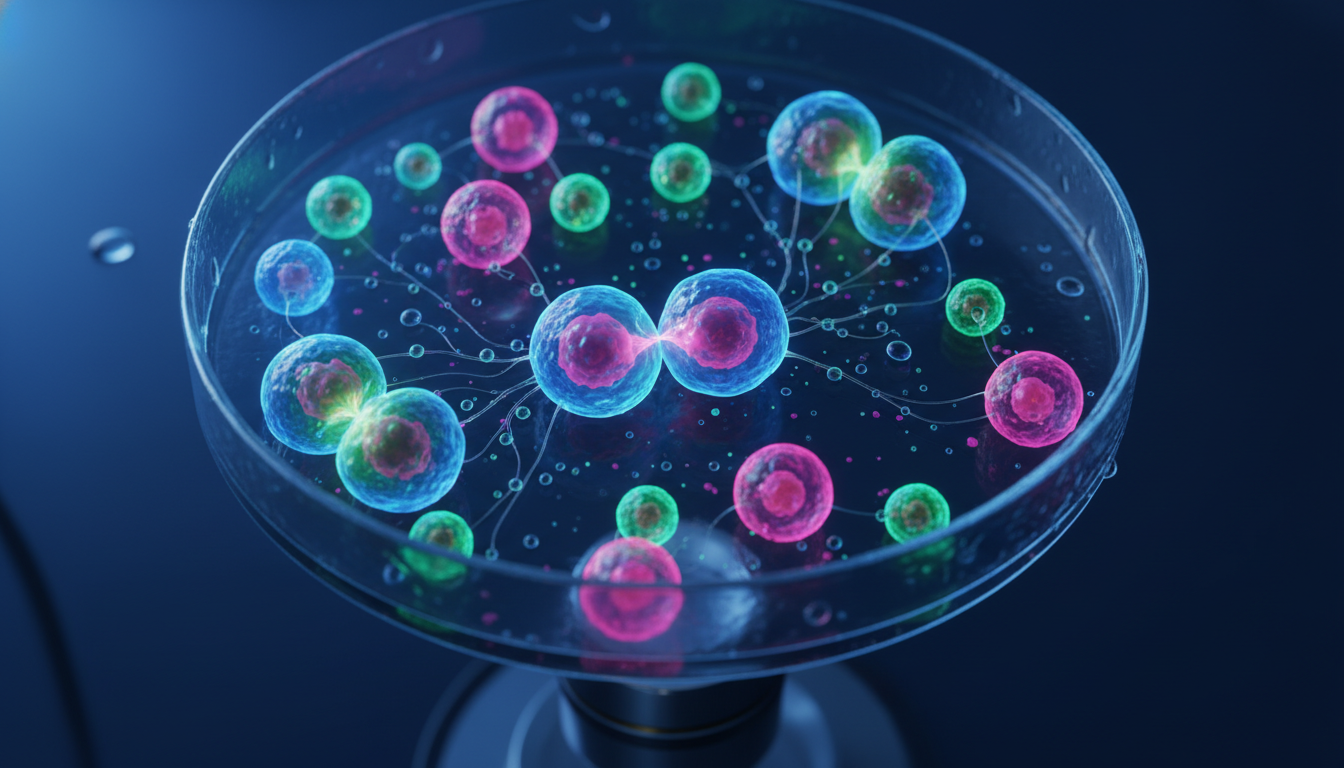
AIが生成したビジュアル
タップして拡大

あなたが見たい動画も
1分で要約・図解化しませんか?
無料登録で累計3回まで
主要トピック
The Antimatter Paradox
- Antimatter is identical to matter but with opposite charge.
- Matter and antimatter annihilate into energy on contact.
- The Big Bang should have produced equal amounts, yet matter dominates the universe.
The One-in-a-Billion Mystery
- Cosmic calculations show 10 to the 89th photons in the CMB.
- This implies a survival rate of only one matter particle per billion.
- CERN aims to find the 'glitch' in physics that caused this asymmetry.
The CERN Antimatter Factory
- Uses the Antiproton Decelerator (AD) to slow particles.
- Employs magnetic traps to prevent annihilation with container walls.
- Conducts experiments like GBAR to test if antimatter falls 'down'.
Summary & Action Plan
- Antimatter research tests the limits of the Standard Model.
- Stay updated on CERN’s ALPHA and GBAR experiment results.
- Support fundamental science as the foundation for future breakthroughs.
次はあなたが魔法を使う番です
あなたが作った要約が、
同じように悩む誰かの灯火になります。
無料登録で累計3回まで
よくある質問
Q1.Could antimatter be used to create a powerful bomb?
While antimatter is highly energetic, the amount CERN produces is far too small. It would take billions of years at current production rates to create enough for a significant explosion.
Q2.What is the primary goal of CERN's antimatter research?
The goal is to find any difference in the properties of matter and antimatter to explain why the universe didn't annihilate itself shortly after the Big Bang.
Q3.How is antimatter stored if it destroys everything it touches?
It is held in magnetic and electric traps within a vacuum. These fields keep the particles suspended in the center of a chamber so they never touch the walls.
Q4.Does antimatter fall up or down in gravity?
Current experiments at CERN suggest that antimatter falls down just like regular matter, which aligns with Einstein's theory of general relativity.
Q5.Why is antimatter so expensive to produce?
It requires a massive amount of energy and sophisticated particle accelerators to create just a few antiprotons, making it the most expensive substance on Earth.