The philosophical landscape of the 20th century was deeply shaped by Albert Camus and his exploration of the human condition. His seminal work, The Myth of Sisyphus, concludes with the provocative line, 'One must imagine Sisyphus happy.' This statement serves as the foundation for Absurdism, a philosophy that identifies the friction between our rational demands and an irrational world. In Greek mythology, Sisyphus was a clever king of Corinth who famously outsmarted the gods. He managed to trap Thanatos, the god of death, and even convinced Persephone to let him return to the living world after his death. His hubris and defiance eventually led to a final, inescapable punishment from Zeus: rolling a massive boulder up a hill, only for it to roll back down for eternity. Camus uses this myth as an allegory for modern human existence. Much of our daily life consists of 'tiny boulders'—repetitive tasks like household chores, career benchmarks, and social obligations that often feel futile. Despite our progress, we eventually find ourselves back at the bottom of the hill, facing the inevitable reality of mortality and the silence of the universe regarding our ultimate purpose. To navigate this, Camus suggests a concept called 'Revolt.' Instead of falling into despair or nihilism, one should acknowledge the absurdity of the situation with total lucidity. By continuing the struggle without the illusion of a grand reward, the individual triumphs over their condition. In this context, happiness is not a result of the work, but a defiant act of rebellion against the meaningless of the universe. However, for many, the word 'happy' feels insufficient for such a wretched condition. A more practical interpretation can be found in radical acceptance, a core component of modern psychology. Rather than brute-forcing a feeling of pleasure, we can aim for a state where we no longer struggle against the reality of our circumstances. This is where Acceptance and Commitment Therapy (ACT) becomes highly relevant. ACT encourages individuals to accept negative thoughts and feelings as passing phenomena rather than defining characteristics. By creating a distance between the 'self' and the 'content' of our thoughts, we can observe our internal struggles without being consumed by them. To apply this in your own life, follow these structured logical steps: 1. Acknowledge the Absurd: Identify the areas of your life that feel repetitive or lacking in inherent meaning without trying to fix them immediately. 2. Practice Radical Acceptance: Stop using your energy to resist the reality of your constraints or the silence of the universe. 3. Shift from Self-as-Content to Self-as-Context: Recognize that you are the space in which thoughts occur, not the thoughts themselves. 4. Calibrate Awareness to Values: Choose to orient your focus toward values like curiosity, creativity, or wonder, even within your repetitive 'boulders.' 5. Engage with the Process: Reclaim ownership by focusing on the quality of each step and each breath rather than the ultimate destination of the boulder. By adopting this perspective, we move toward a non-attachment to both happiness and unhappiness. We stop asking if we are happy and instead focus on being present within our actions. This shift allows us to find a sense of wonder in the landscape of our lives, regardless of the ultimate futility of the task. Ultimately, Camus's work is a call to spirited endurance. It is a reminder that while we may never find a universal 'why,' we have the power to determine the 'how' of our existence. By embracing the struggle as our own, we transform a cosmic punishment into a personal masterpiece of resilience and awareness.
Finding Meaning in the Absurd: A Philosophical Guide to Overcoming Modern Nihilism Through the Myth of Sisyphus
結論Absurdism suggests that while the universe lacks inherent meaning, individuals can find liberation and joy by lucidly acknowledging this futility and revolting through radical acceptance and value-based action.

Pursuit of Wonder/The World Feels Insane Because You’re Paying Attention/📅 2026年4月28日 公開
信じられますか?このクオリティの記事と図解を manabi は たった1分 で自動生成しました
この動画の重要ポイント
- 1Absurdism is the fundamental conflict between the human innate desire for inherent meaning and the universe's persistent, cold silence.
- 2True liberation is found not in escaping the futility of life, but in acknowledging it with lucidity and revolting through defiant joy.
- 3Modern psychological frameworks like Acceptance and Commitment Therapy (ACT) provide practical tools to shift from a suffering-based identity to one of observing awareness.
こんな人におすすめ
- Individuals feeling overwhelmed by the repetitiveness of modern work life
- Philosophy enthusiasts seeking practical applications for existentialist thought
- People struggling with nihilism and searching for a secular meaning
manabi 編集部の視点
The content provides a sophisticated bridge between classical existential philosophy and modern cognitive-behavioral tools. While the video references Albert Camus extensively, readers should note that Camus himself often distanced himself from the 'existentialist' label to avoid being tied to a rigid system. A practical caveat: radical acceptance does not mean passive resignation to injustice or avoidable harm, but rather a psychological stance toward the inherent limitations of mortality. This distinction is vital for maintaining agency in a seemingly indifferent world. Author: '
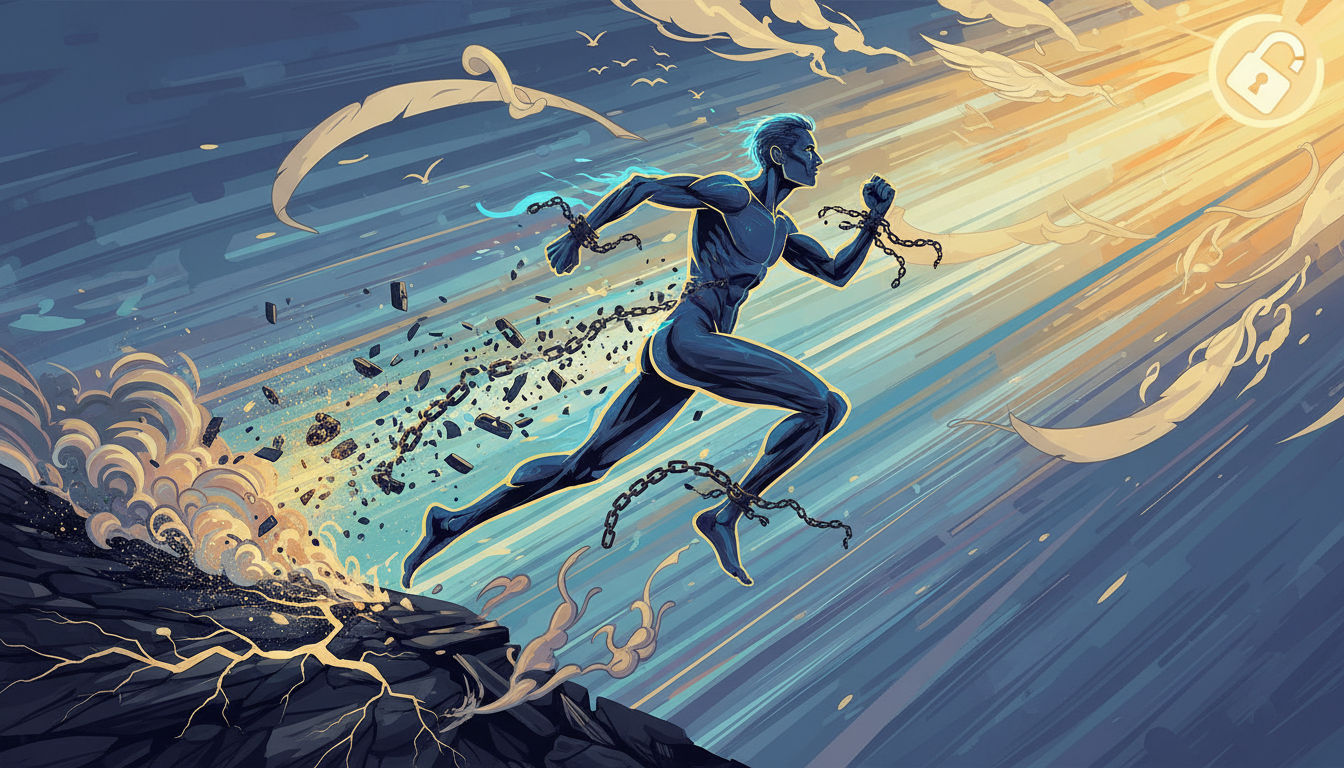
AIが生成したビジュアル
タップして拡大

あなたが見たい動画も
1分で要約・図解化しませんか?
無料登録で累計3回まで
主要トピック
The Absurdist Dilemma
- Humans crave meaning, but the universe remains silent.
- Albert Camus calls this conflict 'the Absurd'.
- Sisyphus is the ultimate symbol of this eternal struggle.
The Power of Revolt
- Despair is a choice; revolt is a superior alternative.
- Acknowledge the struggle with total lucidity and awareness.
- Find joy not in the goal, but in the defiant act of continuing.
Psychological Tools for Meaning
- Use Acceptance and Commitment Therapy (ACT) to create mental distance.
- Shift from 'I am my thoughts' to 'I am observing my thoughts'.
- Focus on 'Self-as-Context' to find peace amidst the chaos.
Summary & Action Plan
- Stop waiting for the boulder to stay at the top of the hill.
- Define your values and let them dictate the quality of your effort.
- Reclaim ownership of your life by embracing the absurdity of existence.
次はあなたが魔法を使う番です
あなたが作った要約が、
同じように悩む誰かの灯火になります。
無料登録で累計3回まで
よくある質問
Q1.What does Albert Camus mean by 'the Absurd'?
The Absurd is the tension that arises when the human mind's search for order and meaning meets the universe's lack of both. It is a conflict of perspective.
Q2.Is Sisyphus actually happy in the myth?
In the original myth, he is punished. However, Camus argues we must *imagine* him happy because his awareness of his fate and his continued effort represent a triumph over it.
Q3.How can I apply Absurdism to my daily job?
By acknowledging the repetitive nature of work and choosing to find value in the craftsmanship or the presence of the moment rather than just the paycheck.
Q4.What is the difference between Nihilism and Absurdism?
Nihilism claims that because life has no meaning, nothing matters. Absurdism claims that while life has no inherent meaning, we should embrace the struggle and create our own joy anyway.
Q5.What is 'Self-as-Context' in psychological terms?
It is the realization that you are the observer of your thoughts and feelings, not the thoughts themselves. This creates a space for better decision-making.