The Relativity of Motion and the Vortex Myth
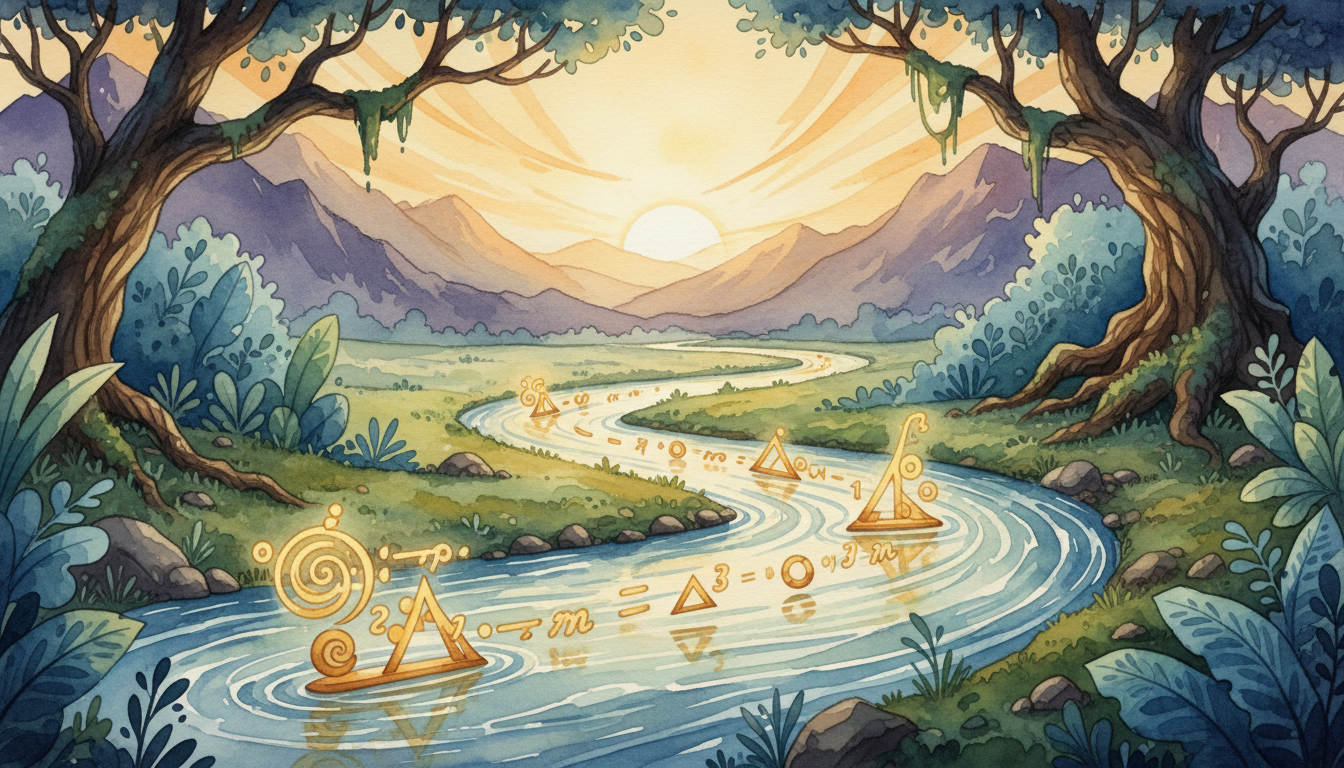
To understand how Earth moves, we must first confront the concept of Galilean relativity. In 1632, Galileo Galilei proposed that within an enclosed, non-accelerating system, there is no physical experiment that can determine whether the system is at rest or moving at a constant velocity. This principle is the foundation of modern physics. When we view popular internet videos showing the solar system moving in a corkscrew or 'vortex' pattern, we are seeing a valid frame of reference, but it is often presented with the false claim that the traditional model of planets orbiting the Sun is 'wrong.'
In reality, no single frame of reference is fundamentally superior to another. We choose the frame that is most computationally useful. For a person catching a ball, the Earth’s surface is the rest frame. For NASA sending a probe to Mars, the solar system’s center is the rest frame. The 'vortex' view is simply a perspective that accounts for the Sun’s motion around the galaxy, but it doesn't invalidate the elliptical orbits we learn in school. It is essential to avoid 'reference frame chauvinism' and recognize that Earth's movement is a nested series of complex trajectories.
| Frame of Reference | Purpose | Approximate Velocity |
|---|---|---|
| Earth's Surface | Daily life, ballistics | 0 to 1,600 km/h |
| Solar System Barycenter | Interplanetary travel | 30 km/s (Earth orbit) |
| Local Standard of Rest | Galactic dynamics | 230 km/s (Sun orbit) |
| CMB Rest Frame | Cosmological studies | 368 km/s |
The Barycenter and the Sun's Hidden Dance
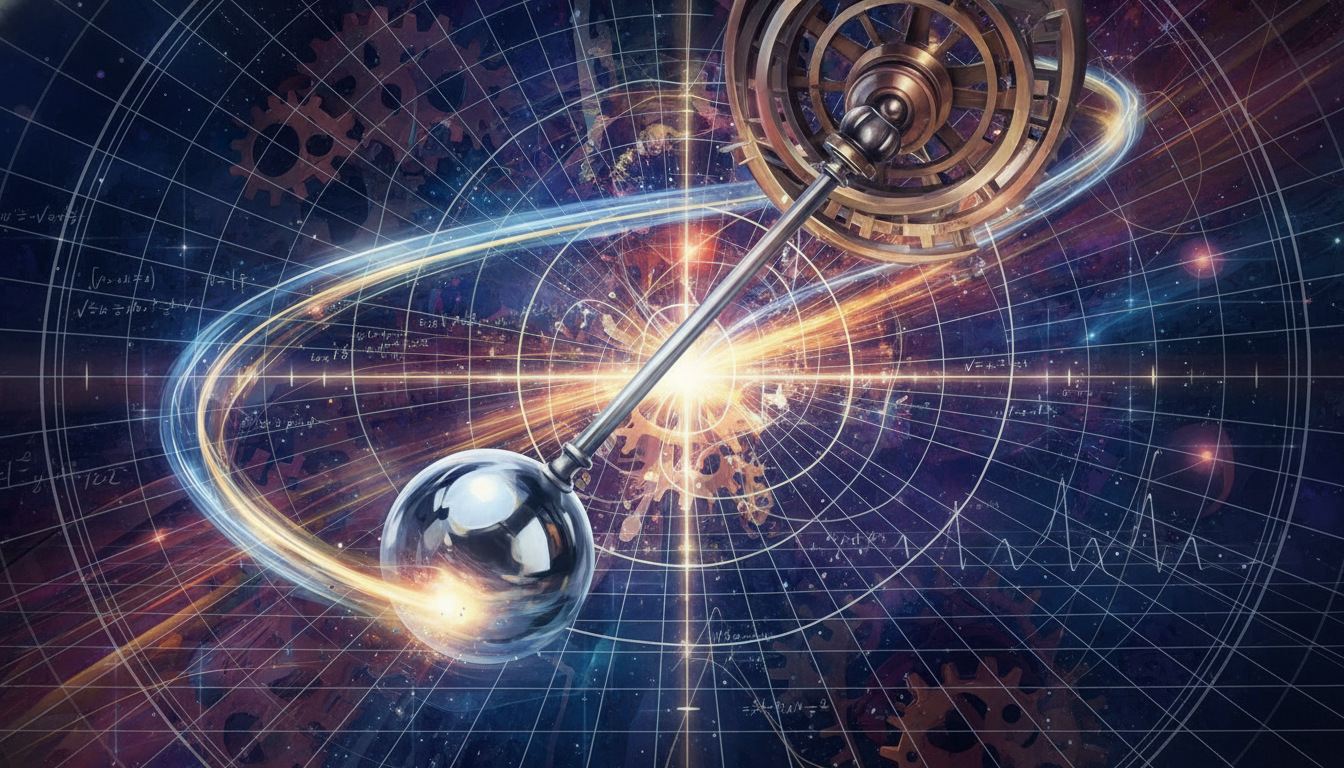
While we often say the planets orbit the Sun, this is a simplification. Gravity is a mutual force; just as the Sun pulls on Jupiter, Jupiter pulls on the Sun. This leads to the concept of the Barycenter—the center of mass for the entire solar system. Because Jupiter and Saturn are so massive, the Barycenter is not always at the center of the Sun. In fact, it often shifts outside the Sun’s physical surface.
As a result, the Sun performs a complex 'pirouette' around this empty point in space. This motion causes Earth’s elliptical orbit to slightly stretch, squish, and rotate over thousands of years. These shifts, known as Milankovitch cycles, have profound impacts on Earth’s climate and have been historically linked to the onset of ice ages. Earth's motion is thus not a perfect repeating loop but a shifting, evolving path influenced by the gravitational tug-of-war between the giant planets.
ここからが大事な
ポイントです
具体例・注意点・明日から使えるヒントを整理しています。
✨無料閲覧で全文 + 図解の完全版を3日間いつでも読み返せる
あなたの好きな動画も、
1〜2分でAI要約
📚 お気に入り保存 + ✨ あなたの動画をAI要約
(無料登録10秒)
✏️ この記事で学べること
- ▸、 「 」 。 、 、 、 。
10秒で完了・パスワード作成不要