The Fundamental Principles of Topology and Manifolds
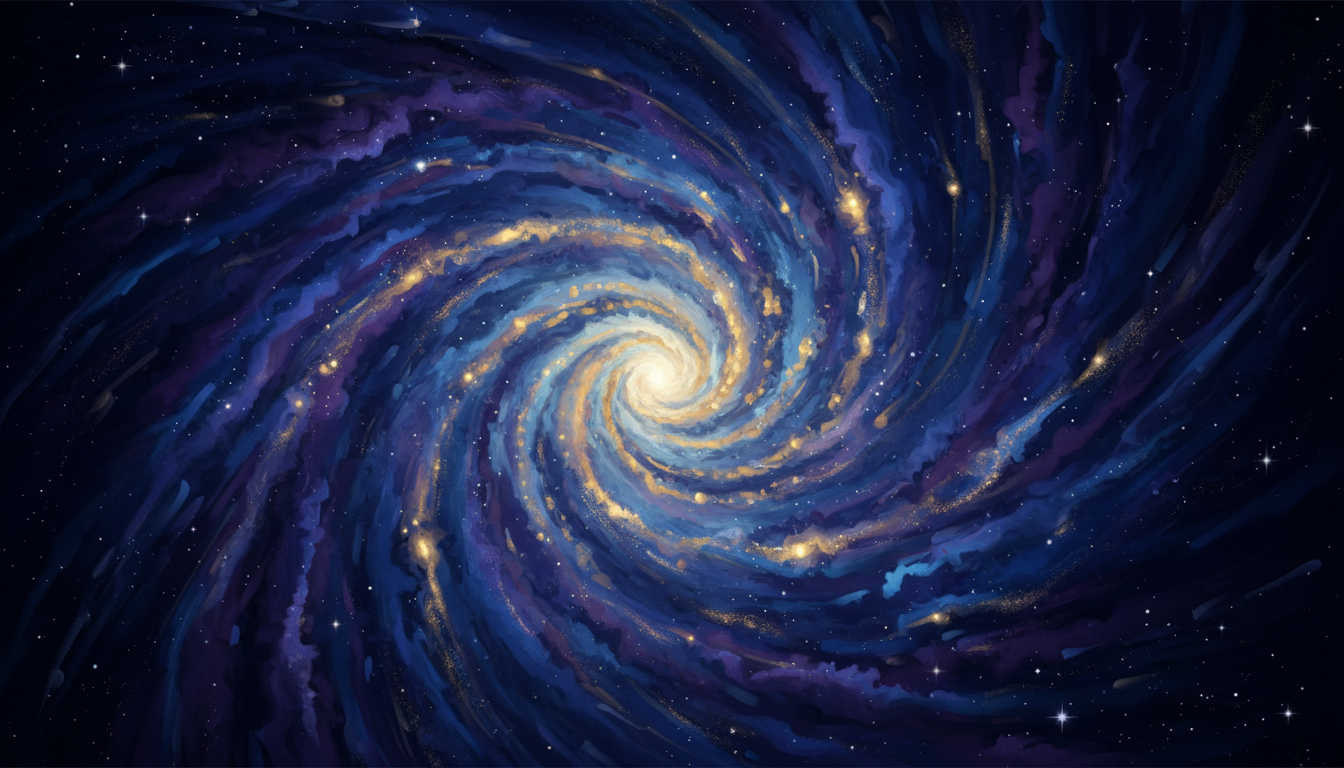
Topology is the mathematical study of abstract spaces, specifically focusing on properties that remain invariant under continuous deformation. While some topological spaces can exhibit wild and unpredictable behavior, mathematicians like Maggie Miller focus on manifolds. A manifold is a specific category of space that, when examined at a sufficiently small scale, is indistinguishable from flat Euclidean space. This local simplicity is the defining characteristic of a manifold, allowing us to apply familiar rules of geometry to even the most exotic shapes.
To understand a manifold, one must distinguish between local and global structures. Locally, every manifold looks like the standard space we learn about in school—a line, a plane, or three-dimensional space. However, when we zoom out to view the manifold in its entirety, the global structure can reveal circles, spheres, or even more complex objects. This duality is what makes topology a rich field of study, as it seeks to classify these global shapes based on their fundamental connectivity.
Consider the one-dimensional manifold known as a circle. If you were an infinitely small being living on the circumference of a circle, your world would look like a straight line. You could move forward or backward, and nothing would suggest you were on a curved path. Only by completing a full circuit would you realize the global structure of your world is closed. This logic extends to higher dimensions, where the global shape becomes increasingly difficult to visualize.
| Manifold Dimension | Local Appearance | Global Example |
|---|---|---|
| 1D | Straight Line | Circle |
| 2D | Flat Plane | Sphere or Torus |
| 3D | 3D Space | Our Universe |
| 4D | 4D Euclidean Space | 4-Torus |
In our daily lives, we inhabit a three-dimensional manifold. We can move in three perpendicular directions: forward-backward, left-right, and up-down. While the universe appears to be an endless 3D space, we cannot be certain of its global structure. It could be finite and closed, much like the surface of the Earth, but in a higher-dimensional sense. Understanding 4D topology requires us to extend this logic one step further, into a realm where our physical intuition often fails us completely.
Visualizing the Fourth Dimension Through Analogy
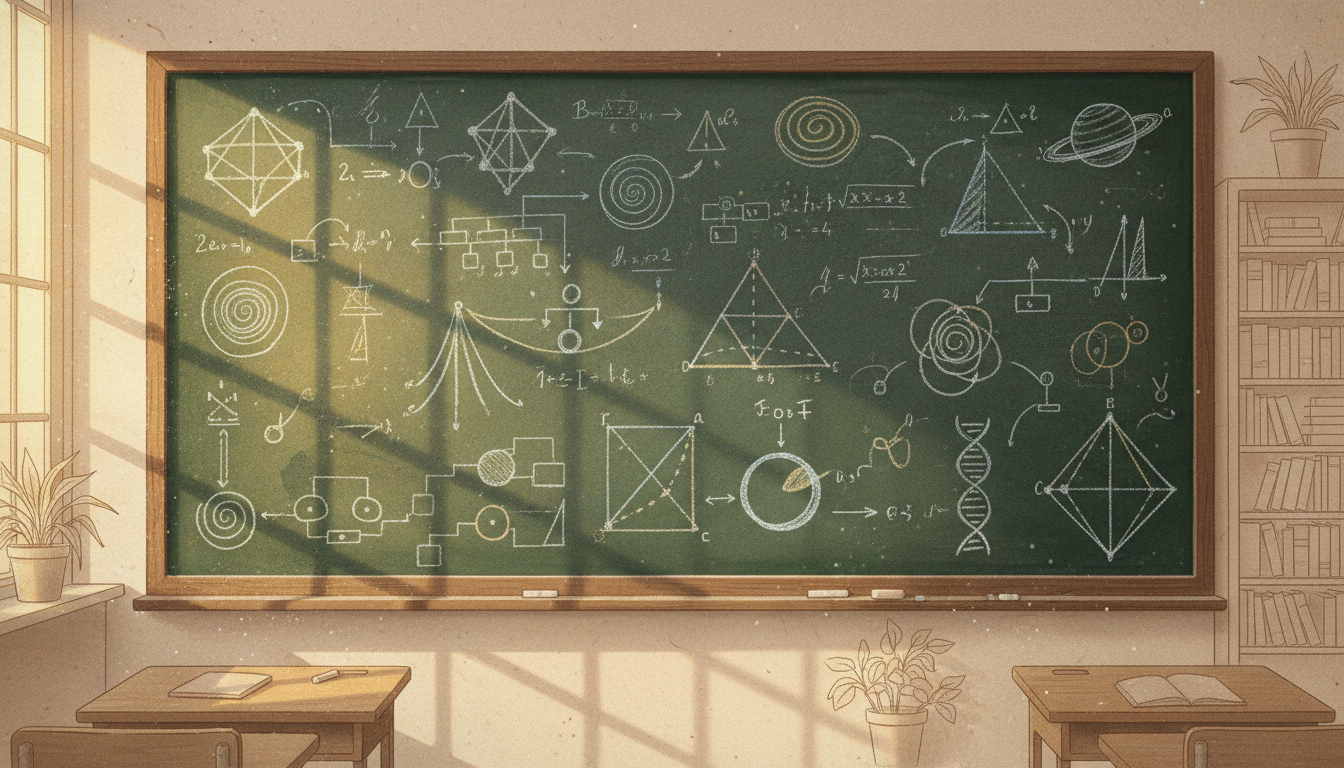
Visualizing four-dimensional manifolds is a notorious challenge for the human brain, which is evolved to process three-dimensional stimuli. To overcome this, topologists like Maggie Miller utilize the power of analogy. A 4D manifold is a space where, at any point, there are four mutually perpendicular directions of movement. Beyond the three spatial dimensions we know, a fourth dimension exists that is completely perpendicular to the others, often conceptualized as a 'time' direction that does not change one's position in space.
To build a mental model of a 4D space, imagine a movie. At time zero, you have a 3D space. As you press play, time begins to flow. If you pause the movie at any moment, you still see a 3D setting, but the time value has changed. In this model, time acts as the fourth dimension. While we often treat time as special, in topology, all dimensions are treated with complete symmetry. The 'time' direction is just another axis along which one can move and glue different parts of the manifold together.
ここからが大事な
ポイントです
具体例・注意点・明日から使えるヒントを整理しています。
✨無料閲覧で全文 + 図解の完全版を3日間いつでも読み返せる
あなたの好きな動画も、
1〜2分でAI要約
📚 お気に入り保存 + ✨ あなたの動画をAI要約
(無料登録10秒)
✏️ この記事で学べること
- ▸4
- ▸3 4
10秒で完了・パスワード作成不要