The Primordial Swirl: Harnessing Gravity for Planetary Accretion
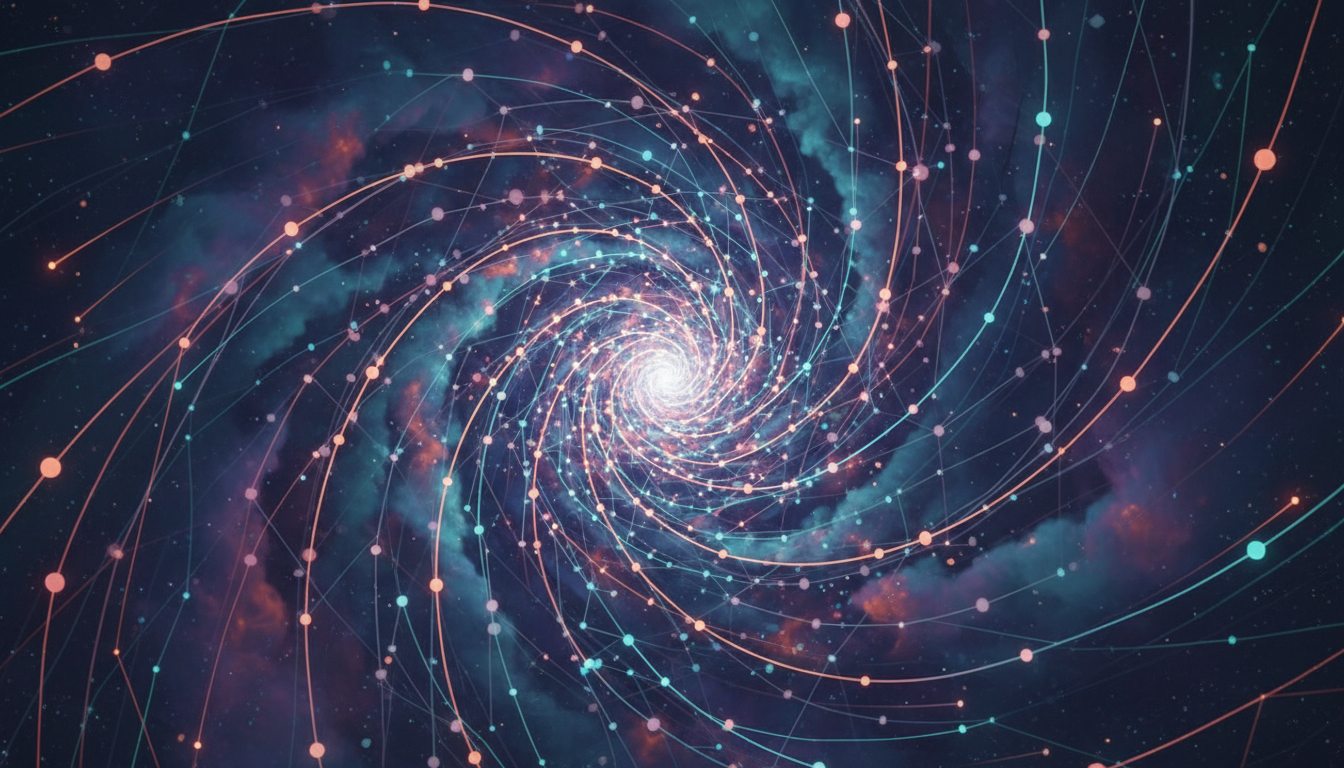
The genesis of any Earth-like planet begins within the chaotic environment of a protoplanetary disk. To initiate the 'cooking' process, one must first observe the massive quantities of dust and gas swirling around a newborn star. This interstellar debris is the raw material of the universe, yet it requires a catalyst to transition from microscopic particles to a structured world. The primary force at play here is gravity. As the star matures, its gravitational pull begins to influence the surrounding matter, causing particles to collide and stick together in a process known as accretion.
Over several million years, these collisions result in the formation of planetesimals. These are solid objects, ranging from several kilometers to hundreds of kilometers in diameter, that serve as the building blocks for larger planetary bodies. The efficiency of this stage is paramount; without sufficient density and the right mix of materials, the planet will fail to achieve the mass necessary to hold an atmosphere or sustain geological activity. It is a delicate balance of orbital mechanics and material science occurring on a galactic scale.
| Process Stage | Key Action | Resulting Form |
|---|---|---|
| Accretion | Gravitational Clumping | Dust & Gas Clouds |
| Coalescence | Kinetic Collision | Planetesimals |
| Protoplanet Formation | Mass Accumulation | Planetary Embryo |
Success in this initial phase depends heavily on the proximity to the host star. If the material is too close, the intense radiation can blow away the lighter gases and dust before they have a chance to clump. Conversely, if the material is too far, the density of solid matter decreases, making the formation of a rocky core much more difficult. This highlights the importance of the initial 'swirl' and the necessity of a stable environment for the young star.
Thermal Dynamics: Why Temperature Dictates Planetary Taxonomy
Temperature is perhaps the most critical variable in the planetary recipe. When 'baking' your planet in starlight, the thermal environment determines whether you end up with a rocky terrestrial world or a massive gas giant like Jupiter or Saturn. If the environment is too cold, volatile substances like frozen water and slow-moving gas molecules accumulate rapidly. This leads to the runaway growth of a gas giant, where the planet’s gravity becomes strong enough to capture hydrogen and helium from the surrounding nebula.
To achieve an Earth-like result, the temperature must remain within a specific window. Ideally, it should not exceed 1,000 degrees Celsius, as excessive heat prevents the condensation of essential silicate minerals and metals. Furthermore, the volume of solid material used in the mix determines the final density. A surplus of heavy elements will result in a super-dense world with crushing gravity, which may be unsuitable for the geological processes we associate with life.
ここからが大事な
ポイントです
具体例・注意点・明日から使えるヒントを整理しています。
✨無料閲覧で全文 + 図解の完全版を3日間いつでも読み返せる
あなたの好きな動画も、
1〜2分でAI要約
📚 お気に入り保存 + ✨ あなたの動画をAI要約
(無料登録10秒)
✏️ この記事で学べること
- ▸、 、 。 、 、 、 、 。
10秒で完了・パスワード作成不要