The Intelligence Curse: Why People are Becoming Secondary to Data
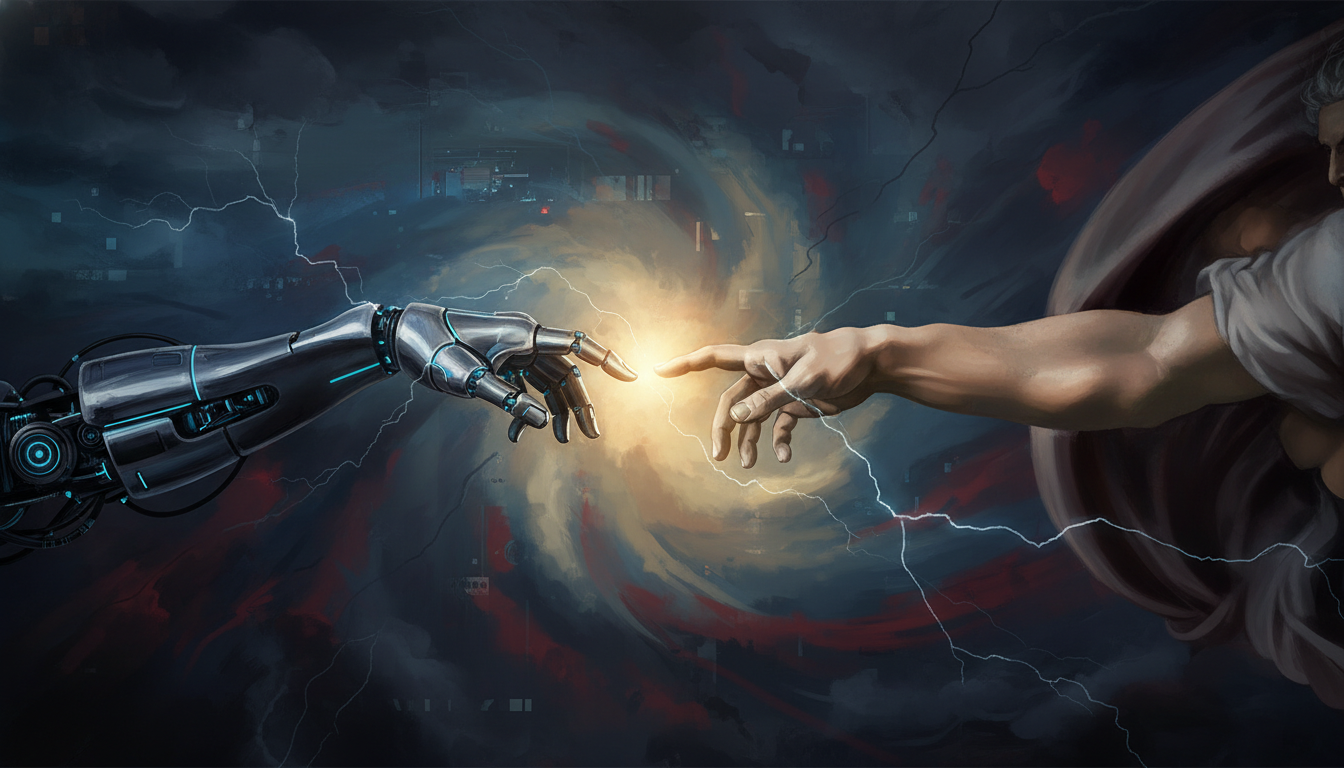
In the traditional economic landscape, a nation’s strength was measured by the health, education, and productivity of its citizens. However, Tristan Harris and Chris Williamson suggest we are entering a phase known as the Intelligence Curse. This concept, originally explored by Luke Drago, is a direct parallel to the classic 'resource curse.' In countries like Venezuela or Sudan, the discovery of oil led to a total focus on extraction infrastructure at the expense of human development. When a country's GDP is tied to a raw resource rather than human innovation, the incentive to invest in schools, hospitals, or social safety nets evaporates.
We are on the verge of a world where GDP growth is driven primarily by data centers and AI clusters rather than the labor of human beings. As the economic engine shifts from the populace to silicon, the fundamental contract between the state and the citizen begins to fray. If the government no longer needs your labor to generate tax revenue and national wealth, your well-being becomes a secondary concern. This shift represents a move toward an antihuman future where people are relegated to being passive consumers of addictive social media while the real economic value is generated by machines.
Historically, humans were the primary economic engine, which forced leadership to ensure a certain quality of life. This ensured a circular flow of capital: young people entered the workforce, drove innovation, and supported the aging population. In an AI-dominant model, this cycle is broken. The revenue flows directly into a handful of massive technology firms, bypassing the middle class entirely. This structural change isn't just a technological upgrade; it is a paradigm-shifting event that undermines the foundational assumptions of the post-World War II global order.
| Feature | Traditional Economy | AI Replacement Economy |
|---|---|---|
| Primary Wealth Driver | Human Labor and Innovation | Data Centers and AI Models |
| Government Incentive | High investment in education/health | High investment in energy/computing |
| Wealth Distribution | Broad (via wages and taxes) | Concentrated (via algorithm ownership) |
| Economic Stability | Tied to employment rates | Tied to model efficiency |
The Architect of Obsolescence: Understanding the Replacement Economy

A common narrative pushed by tech optimistic circles is that AI will merely augment human work, freeing us to pursue art and poetry while Universal Basic Income (UBI) covers our needs. However, Harris argues that the reality is far more clinical. The major AI companies are not designing systems to 'support' humans; they are designing systems to replace human labor. This is necessitated by the billions of dollars in debt and investment these companies have taken on. To justify such astronomical valuations, they must capture the entire value of the human workforce, effectively creating a full replacement economy.
This phenomenon can be described as the 'coffin builder's occupation.' Currently, programmers, artists, and customer service agents are using AI to increase their efficiency. However, every interaction provides high-quality training data for the next generation of models. We are essentially building the tools for our own obsolescence. The multi-trillion dollar prize at the end of the development race is the total ownership of a specific sector's economic output, removing the human overhead entirely to maximize growth and profit margins.
ここからが大事な
ポイントです
具体例・注意点・明日から使えるヒントを整理しています。
✨無料閲覧で全文 + 図解の完全版を3日間いつでも読み返せる
あなたの好きな動画も、
1〜2分でAI要約
📚 お気に入り保存 + ✨ あなたの動画をAI要約
(無料登録10秒)
✏️ この記事で学べること
- ▸AI 「」
- ▸GDP
10秒で完了・パスワード作成不要