The Quest to Bottle a Star: Why Fusion is No Longer Just Science Fiction
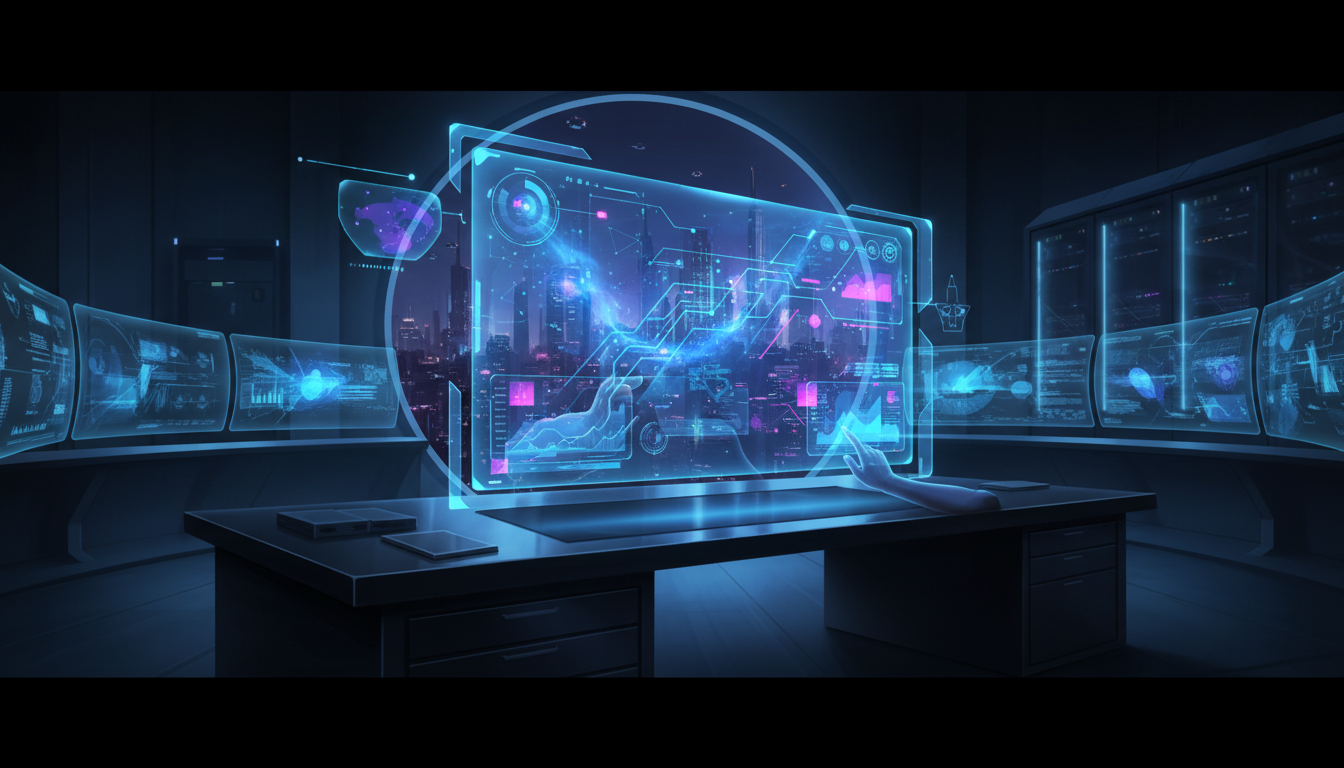
For decades, nuclear fusion has been the subject of a cynical joke: it is the energy of the future, and it always will be. However, we are witnessing a massive shift in this narrative as billions of dollars in private and public capital pour into fusion startups. This sudden influx of investment is driven by a convergence of factors, including the desperate need for clean energy to power high-demand technologies like Large Language Models. The fundamental physics challenges that once seemed insurmountable have been systematically addressed, leaving us with a final, daunting frontier: the physical engineering of the reactor vessel.
Fusion is essentially the process of recreating the Sun's power on Earth. By slamming hydrogen nuclei together to form helium, a small amount of mass is converted into a staggering amount of energy. While the Sun achieves this through the sheer force of its massive gravity, terrestrial reactors must rely on extreme temperatures—reaching over 100 million Kelvin—to overcome the electrostatic repulsion between protons. This temperature is roughly ten times hotter than the core of the Sun, creating a environment that no solid material can touch directly without being instantly vaporized.
To manage this, scientists utilize two main confinement methods: inertial and magnetic. The National Ignition Facility recently achieved a net energy gain using lasers for inertial confinement, but this method produces energy in bursts. For a steady, commercial power supply, magnetic confinement—specifically the Tokamak design used by the European project ITER—is considered the most viable path. In these machines, powerful superconducting magnets create a magnetic bottle that keeps the scorching plasma suspended in a vacuum, away from the reactor walls.
| Confinement Type | Mechanism | Energy Output | Current Status |
|---|---|---|---|
| Inertial Confinement | Laser-driven compression | Pulsed / Bursty | Achieved net gain in 2022 |
| Magnetic Confinement | Superconducting magnets | Continuous / Steady | ITER under construction; first plasma pending |
Despite the sophistication of magnetic fields, the plasma is not perfectly contained. Energetic particles and radiation constantly escape the magnetic trap and bombard the inner lining of the reactor. This brings us to the most critical component of the modern fusion project: the First Wall. This wall must survive a temperature gradient that is arguably the most extreme in the known universe, separating a 100-million-degree plasma from superconducting magnets cooled to near absolute zero, just meters away.
The First Wall Crisis: Engineering for the Most Extreme Environment
The First Wall is the frontline of the fusion reactor. It serves as the interface between the artificial star and the outside world. This surface must fulfill three impossible roles simultaneously: it must withstand the intense heat of X-ray and gamma radiation, it must absorb the kinetic energy of high-speed neutrons to generate electricity, and it must facilitate the breeding of new fuel. The sheer scale of the thermal stress is difficult to overstate; the wall is subjected to a constant baking process that would melt almost any substance known to man.
Neutrons represent a unique problem. Because they carry no electrical charge, they are unaffected by the magnetic fields that hold the rest of the plasma. These neutral particles fly straight out of the plasma core and slam into the First Wall at high velocities. This bombardment causes a phenomenon known as sputtering, where atoms from the wall's surface are knocked loose and enter the plasma. This not only erodes the physical integrity of the shield over time but also introduces impurities into the fuel, which can rapidly cool the reaction and cause it to fail.
ここからが大事な
ポイントです
具体例・注意点・明日から使えるヒントを整理しています。
✨無料閲覧で全文 + 図解の完全版を3日間いつでも読み返せる
あなたの好きな動画も、
1〜2分でAI要約
📚 お気に入り保存 + ✨ あなたの動画をAI要約
(無料登録10秒)
✏️ この記事で学べること
- ▸1 「」
- ▸、
10秒で完了・パスワード作成不要