The Geometric Curse of the Vortex
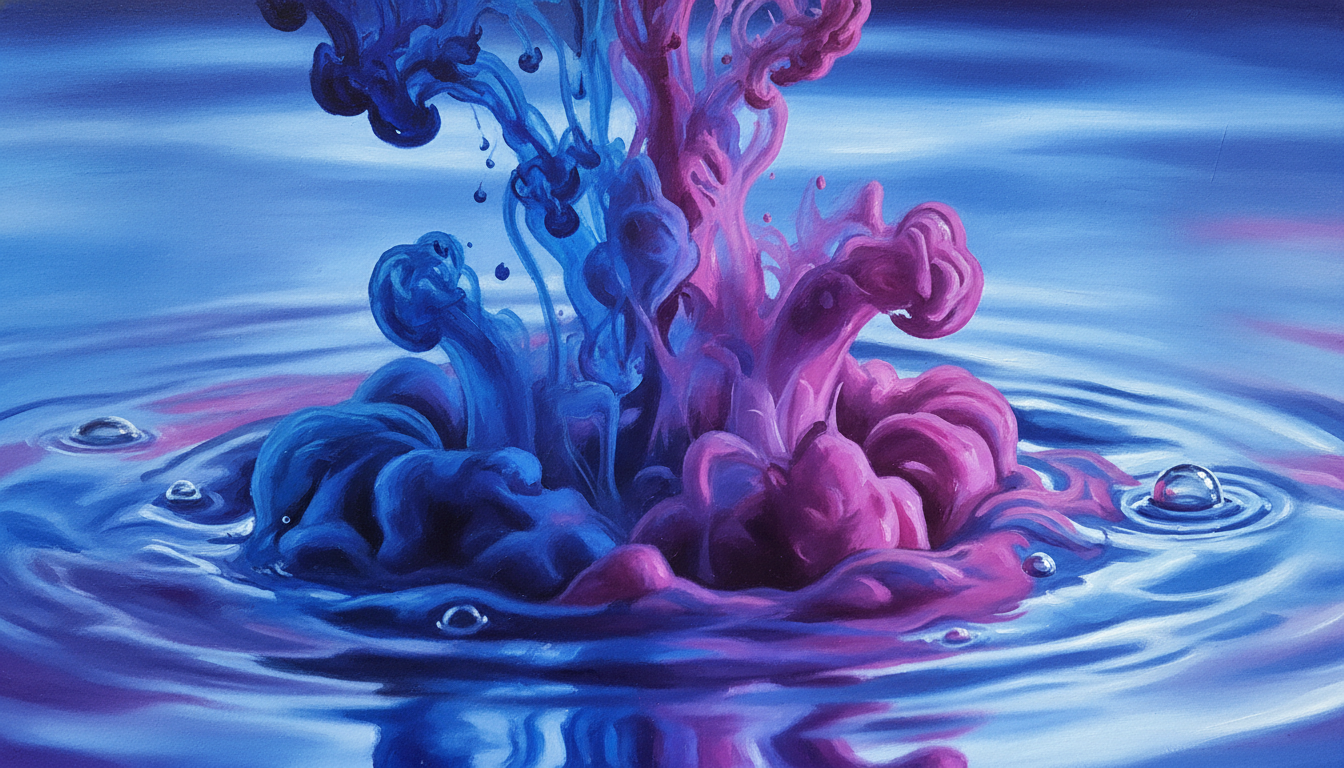
Imagine a sphere covered in perfectly uniform hair. You attempt to comb every single strand flat against the surface. Mathematics has bad news for your aesthetics. The Hairy Ball Theorem proves that at least one point will always stick straight up.
You might try to swirl the hair around a central axis to hide the chaos. But even then, the top and bottom poles will create a vortex. The hair at the centermost point of those swirls has nowhere to go. It is mathematically forced to become a null vector.
This is not a failure of grooming technique. It is a fundamental topological constraint of our universe. No matter how you manipulate the surface, you cannot escape the tuft. The hair must stand up at least once.
In fact, even reducing the problem to a single point is a significant challenge. Most people visualize two poles like the Earth's axis. But with enough creativity, you can compress the chaos into one lone singularity.
- 1Identify the continuous vector field on the surface.
- 2Attempt to flatten all vectors against the tangent plane.
- 3Observe the inevitable appearance of a zero-velocity point.
Therefore, any attempt to create a perfect, smooth flow across a sphere is doomed. Topology is an unyielding master. It dictates the limits of physical systems before they are even built.
Why Your Video Game Glitches

This theorem isn't just about grooming toddlers or imaginary spheres. In computer graphics, developers face this geometric nightmare when orienting 3D airplanes. You need the plane to point its nose along a trajectory while keeping its wings level and continuous.
But if you define the wing direction as a tangent vector on a sphere, you are inviting disaster. As the nose points in different directions, the wing orientation becomes a vector field. Because of the theorem, at least one direction will cause a catastrophic glitch.
ここからが大事な
ポイントです
具体例・注意点・明日から使えるヒントを整理しています。
✨無料閲覧で全文 + 図解の完全版を3日間いつでも読み返せる
あなたの好きな動画も、
1〜2分でAI要約
📚 お気に入り保存 + ✨ あなたの動画をAI要約
(無料登録10秒)
✏️ この記事で学べること
- ▸3D
10秒で完了・パスワード作成不要