Foundations of Computational Geometry: Delaunay and Voronoi

To understand weighted stippling, one must first grasp the relationship between Delaunay triangulation and Voronoi diagrams. At their core, both concepts rely on a set of seed points. A Delaunay triangulation creates a mesh of triangles where no seed point lies inside the circumcircle of any triangle in the network. This property ensures that the triangles are as 'fat' as possible, avoiding long, thin slivers. For developers using JavaScript, leveraging the d3-delaunay package is a highly efficient way to compute these structures without reinventing complex geometric algorithms from scratch.
A Voronoi diagram is the dual of the Delaunay triangulation. It partitions a two-dimensional plane into polygons, or 'cells,' where every point inside a specific cell is closer to its seed point than to any other. This is not merely a mathematical curiosity; it is a fundamental way to describe spatial distribution. In our coding context, we use D3.js to handle the heavy lifting of these calculations, passing an array of coordinates into a Delaunay object and then generating the Voronoi partition from it.
While p5.js is excellent for rendering, D3.js provides the robust data structures needed for fast geometric lookups. Mixing these libraries allows us to maintain a high frame rate while performing complex spatial analysis on thousands of points simultaneously. When initializing your points, remember to format them as a single flat array of [x, y, x, y...] for compatibility with D3's expectations.
| Concept | Primary Characteristic | Visual Result |
|---|---|---|
| Delaunay Triangulation | Empty circumcircle property | Connected mesh of triangles |
| Voronoi Diagram | Proximity-based partitioning | Mosaic of unique polygons |
The Art of Relaxation: Implementing Lloyd's Algorithm
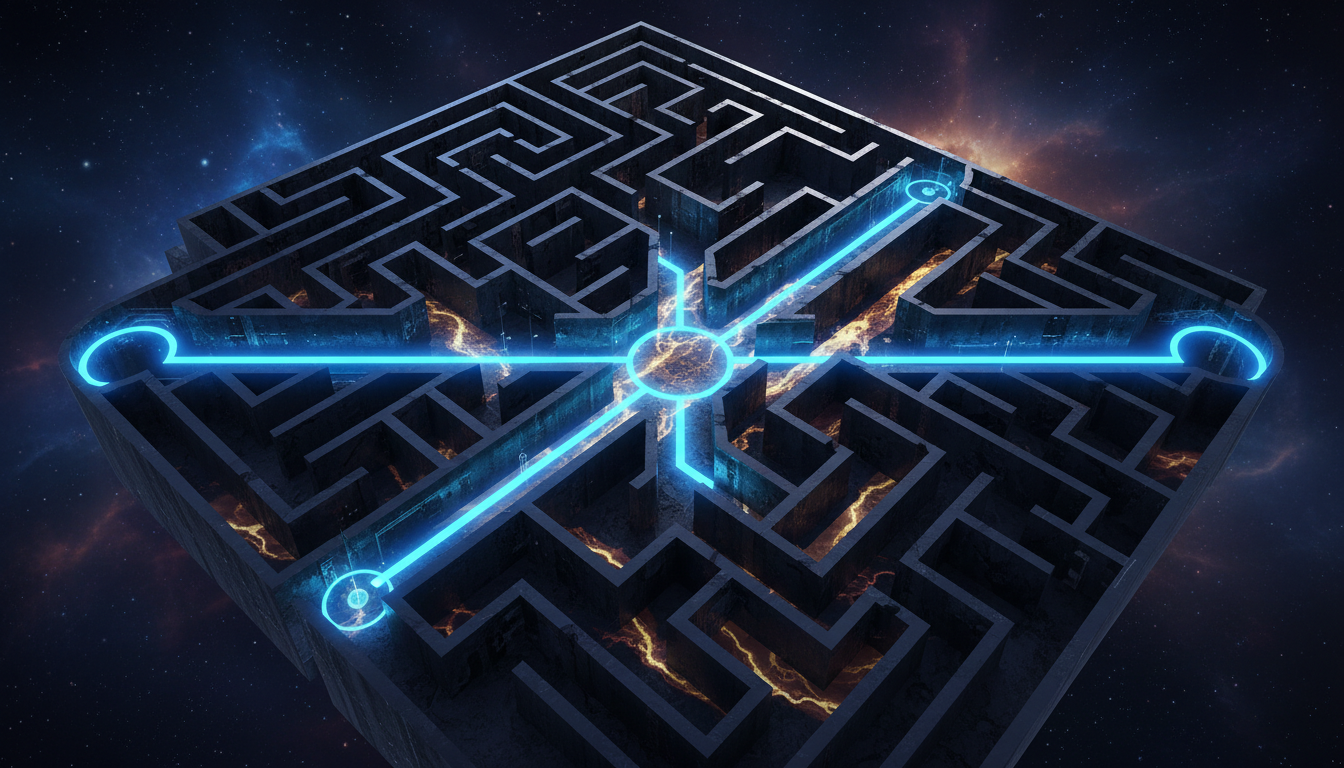
Randomly distributed points often look cluttered or 'noisy.' To achieve a more organized and professional aesthetic, we apply Lloyd's algorithm, also known as Voronoi relaxation. This process involves finding the centroid (the center of mass) of each Voronoi polygon and moving the seed point toward that center. By repeating this process over multiple frames, the points 'relax' into a balanced, organic distribution similar to patterns found in nature, such as the arrangement of cells in a leaf.
Calculating the centroid of a polygon requires more than just averaging the vertices. For a true geometric center, you must calculate the area and use the cross product of the vertices. This math ensures that the point moves to the precise balance point of the polygon's shape. Without this accuracy, the points might collapse into clusters or 'black holes' rather than spreading out evenly across the canvas.
ここからが大事な
ポイントです
具体例・注意点・明日から使えるヒントを整理しています。
✨無料閲覧で全文 + 図解の完全版を3日間いつでも読み返せる
あなたの好きな動画も、
1〜2分でAI要約
📚 お気に入り保存 + ✨ あなたの動画をAI要約
(無料登録10秒)
✏️ この記事で学べること
- ▸「 」 、 。 、 、 。
10秒で完了・パスワード作成不要