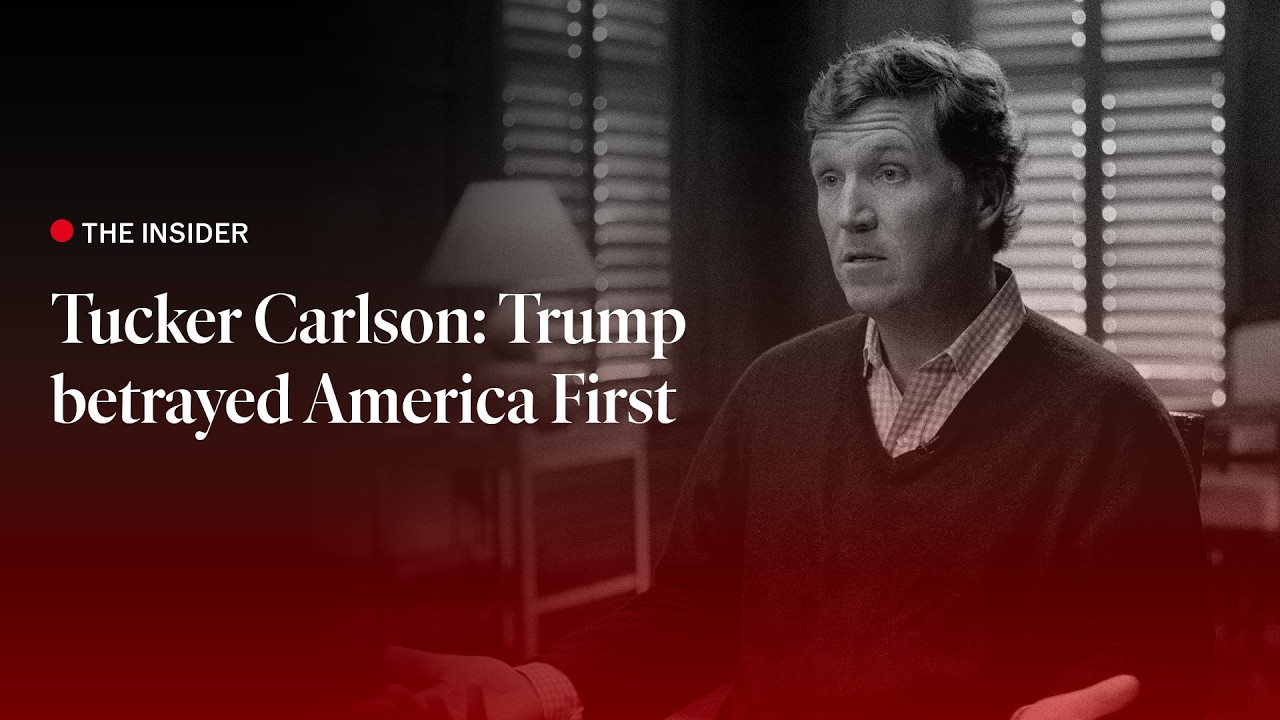
The Confrontation Between National Interest and Foreign Lobbying

In a candid dialogue with Zanny Minton Beddoes, the editor-in-chief of The Economist, Tucker Carlson articulates a provocative stance regarding the current trajectory of American foreign policy. He asserts that the United States has been systematically maneuvered into conflicts that do not serve its direct national interest, specifically citing the recent escalation with Iran. Carlson suggests that the primary driver behind these decisions is not a strategic American necessity but rather the intense lobbying efforts of foreign stakeholders, most notably the Israeli government under Benjamin Netanyahu.
Carlson emphasizes that every government policy is inevitably influenced by stakeholders, yet he highlights a peculiar taboo surrounding the discussion of Israeli influence. He argues that pretending lobbying does not affect foreign policy is a dangerous falsehood. To maintain the integrity of a nation’s history and future, he believes it is essential to identify these influences openly. This transparency is necessary to prevent the repeating of past mistakes, such as the Iraq War, which he claims was also heavily influenced by similar pressures despite historical revisionism.
- The influence of pharmaceutical companies on domestic health policy.
- The role of defense contractors in military spending.
- The impact of foreign heads of state on executive decision-making.
- The disconnect between donor priorities and voter expectations.
Ultimately, Carlson places the burden of responsibility on the American presidency. He argues that while foreign nations will naturally pursue their own interests, the President of the United States has a unique duty to represent the American people first. By failing to 'push back' against foreign pressure, Carlson suggests the executive branch has abdicated its primary responsibility to its own citizenry.
The Perceived Betrayal of the America First Doctrine

At the heart of the critique is the 'America First' doctrine, the foundational promise of the MAGA movement. Carlson asserts that this movement was built on the simple yet revolutionary idea that every calculation in government should center on the interests of the United States. He contends that the war with Iran represents a direct violation of this core promise. According to Carlson, Donald Trump had repeatedly promised to avoid such entanglements, making the current situation a significant ideological departure.
Carlson challenges anyone to provide a sensible argument for how regime change in Iran helps the average American citizen. He dismisses traditional justifications, such as the threat of nuclear programs, as 'fear-mongering' that lacks factual support in the context of the immediate war. The timing of the conflict, he argues, was determined by Israel's strategic needs rather than a considered American timeline, leaving little room for the US to contemplate the long-term consequences or the 'day after' the initial strikes.
ここからが大事な
ポイントです
具体例・注意点・明日から使えるヒントを整理しています。
✨無料閲覧で全文 + 図解の完全版を3日間いつでも読み返せる
あなたの好きな動画も、
1〜2分でAI要約
📚 お気に入り保存 + ✨ あなたの動画をAI要約
(無料登録10秒)
✏️ この記事で学べること
- ▸「」
10秒で完了・パスワード作成不要