The Foundations of Reality: Locality vs. Realism
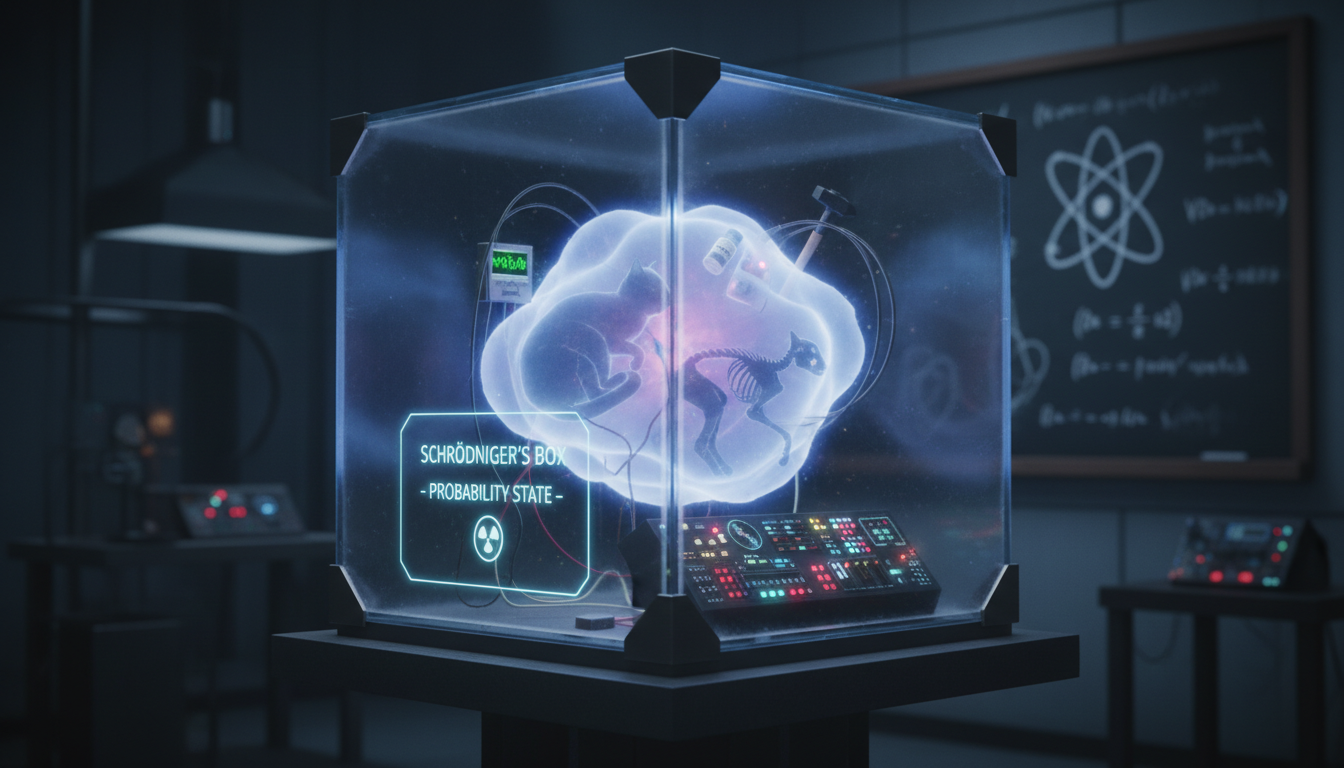
To understand why modern physics suggests the universe might not be 'real' in the way we perceive it, we must first define the two pillars of classical thought: locality and realism. Locality is the common-sense assumption that things can only be affected by their immediate physical surroundings. If you want to move an object or change its temperature, you must interact with it directly or through a medium that takes time to travel. In this view, distance is a physical barrier that information cannot bypass instantaneously.
Realism, on the other hand, is the belief that objects possess definite properties regardless of whether they are being observed. We assume that the moon is in the sky even when no one is looking at it, and that a chair remains solid in an empty room. These two concepts—locality and realism—form the bedrock of our daily experience. However, recent breakthroughs in quantum mechanics have proven that both of these assumptions are fundamentally flawed at the most basic level of existence.
| Concept | Classical Assumption | Quantum Reality |
|---|---|---|
| Locality | Things only affect neighbors | Spooky action at a distance |
| Realism | Objects exist independently | State depends on observation |
| Distance | A physical, costly barrier | A simulated representation |
The Quantum Paradox: Why Observation Changes Everything

The mystery began with the double-slit experiment, which originally aimed to determine if light was a wave or a particle. While light displays wave-like interference patterns, Albert Einstein later proved it also consists of discrete particles called photons. The true 'brain-breaking' moment occurs when we fire single photons one at a time. Logic suggests a single particle must go through one slit or the other, yet even in isolation, an interference pattern emerges. This implies that a single particle exists in superposition, passing through both slits simultaneously as a wave of probability.
Everything changes the moment we try to 'watch' the particle. When detectors are placed at the slits to determine the particle's path, the interference pattern disappears, and the light behaves like simple paintballs. The mere act of capturing information about the path forces the universe to 'resolve' the particle into a specific state. This is strikingly similar to how a video game engine works—it only renders high-detail assets when the player is looking at them to save computational resources.
ここからが大事な
ポイントです
具体例・注意点・明日から使えるヒントを整理しています。
✨無料閲覧で全文 + 図解の完全版を3日間いつでも読み返せる
あなたの好きな動画も、
1〜2分でAI要約
📚 お気に入り保存 + ✨ あなたの動画をAI要約
(無料登録10秒)
✏️ この記事で学べること
- ▸Understanding the concepts of locality and realism
- ▸How the double-slit experiment challenges physical matter
10秒で完了・パスワード作成不要