The Great Paradigm Shift: From Chatbots to Autonomous Laborers

The landscape of artificial intelligence underwent a tectonic shift in early 2026 with the release of Opus 4.6, Gemini 3.1 Pro, and GPT 5.3 Codeex. We have moved beyond the era where AI was merely a sophisticated search engine or a conversational partner. Today, these models function as autonomous laborers capable of executing complex tasks over hours, days, or even weeks without constant human supervision. If you are still prompting like it is 2024—relying on a back-and-forth chat interface to fix errors in real-time—you are already falling behind. The new reality is built on a framework where instructions must be encoded upfront to survive long-duration execution.
Imagine two professionals, Person A and Person B, both using the same high-end model. Person A uses the '2025 skill set,' spending an hour in a chat window to get a presentation 80% correct, then another 40 minutes cleaning up the results. Person B, utilizing the 2026 framework, spends 11 minutes crafting a structured specification. While Person A is still formatting slides, Person B is drinking coffee while the agent completes five perfect decks based on pre-defined quality standards. This is not a difference in intelligence; it is a difference in the discipline of communication. The gap between those who master these new layers and those who do not is now 10-fold and widening every day.
To navigate this, we must deconstruct 'prompting' into four distinct disciplines: Prompt Craft, Context Engineering, Intent Engineering, and Specification Engineering. Each operates at a different altitude and time horizon. While the industry previously focused solely on the first, the true leverage in a world of autonomous agents lies in the higher-order disciplines that define the environment and the strategy of the AI's labor. Understanding this stack is the only way to scale your output without becoming the bottleneck in your own workflow.
The Lower Stack: Prompt Craft and Context Engineering
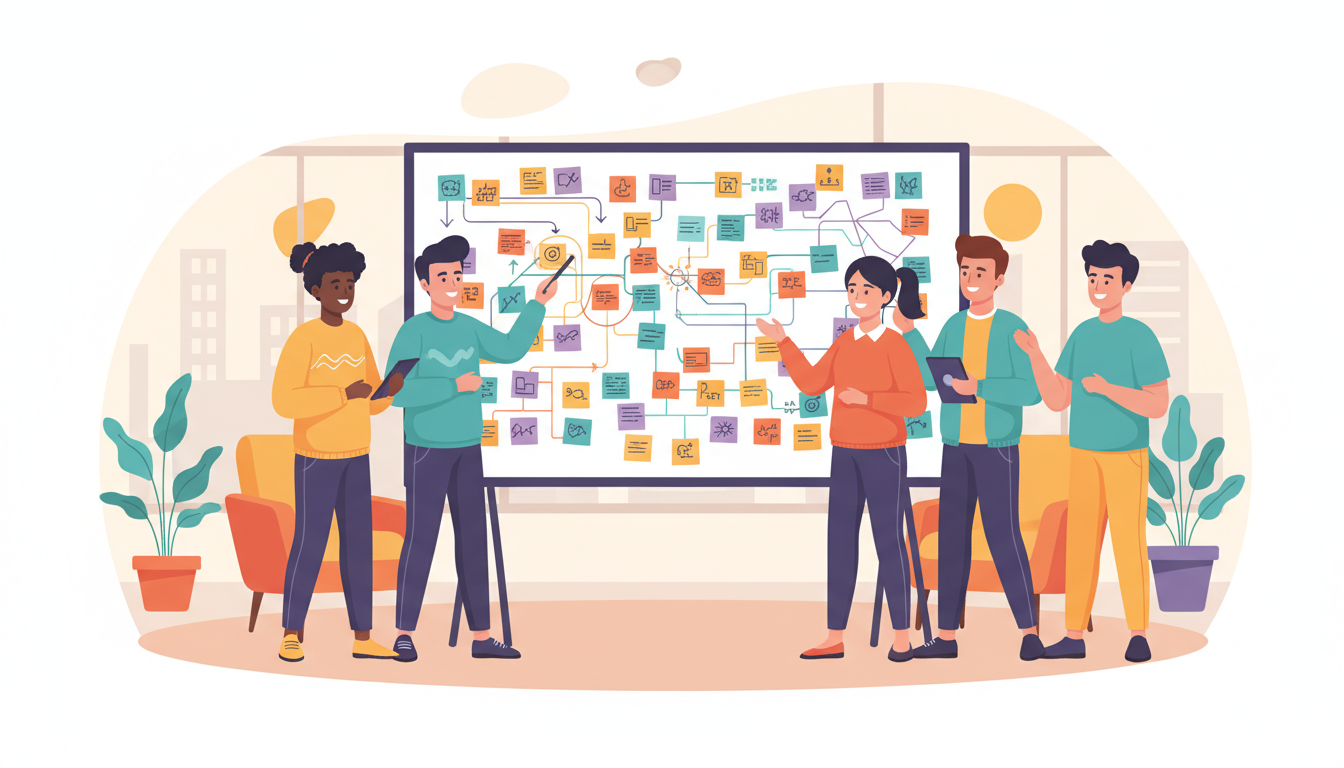
Prompt Craft is the foundation we have all spent the last few years perfecting. It is the art of writing clear instructions, providing examples, and setting output formats within a single session. In 2026, this skill is a 'hygiene factor'—it is the equivalent of being able to type 80 words per minute. It is necessary but no longer a competitive advantage. If you cannot write a well-structured prompt today, you are effectively illiterate in the modern workplace. However, Prompt Craft fails when the agent needs to run for days without checking in. It assumes a human is always there to correct a hallucination or provide missing data.
This leads us to Context Engineering. As Tobi Lütke, CEO of Shopify, noted, the fundamental skill is describing a problem with enough context that it is solvable without further input. Context Engineering is the curation and maintenance of the 'token environment.' In a 2026 context window of millions of tokens, your actual prompt might only be 0.002% of what the model sees. The other 99.98% consists of system prompts, tool definitions, project conventions, and memory systems. High-performers build context infrastructure—ensuring the agent starts every session with the right files and constraints already loaded.
ここからが大事な
ポイントです
具体例・注意点・明日から使えるヒントを整理しています。
✨無料閲覧で全文 + 図解の完全版を3日間いつでも読み返せる
あなたの好きな動画も、
1〜2分でAI要約
📚 お気に入り保存 + ✨ あなたの動画をAI要約
(無料登録10秒)
✏️ この記事で学べること
- ▸AI
- ▸AI
10秒で完了・パスワード作成不要